Liquid Crystal Display (LCD) technology has become the cornerstone of modern Passenger Information Systems (PIS) in urban metro networks worldwide. As cities continue to expand and metro systems carry billions of passengers annually, the demand for real-time information, wayfinding assistance, and emergency communication has never been greater. This article examines the current state of LCD display applications in urban metro systems, presenting market data, technical standards, real-world case studies, and future trends that define this rapidly evolving sector. From station platforms to onboard carriages, LCD displays have fundamentally transformed how passengers interact with urban rail transit, improving satisfaction, reducing wait times, and enhancing operational safety.
Urban metro systems represent the backbone of public transportation in megacities across the globe. With over 200 cities operating metro networks and carrying more than 168 million passengers daily worldwide, effective communication between transit authorities and passengers has become a critical operational priority. Traditional static signage and fluorescent display boards have proven inadequate for handling the complexity of modern metro operations, where real-time updates, multi-language support, and emergency notifications are essential.
LCD technology has emerged as the dominant display solution for metro applications, capturing 47.2% of the global passenger information display market as of 2025, representing a $2.35 billion installed base. While competing technologies such as OLED and Micro-LED are gaining traction, LCD maintains its market leadership through mature supply chains, proven reliability records, superior cost-performance ratios, and established compliance with railway industry standards.
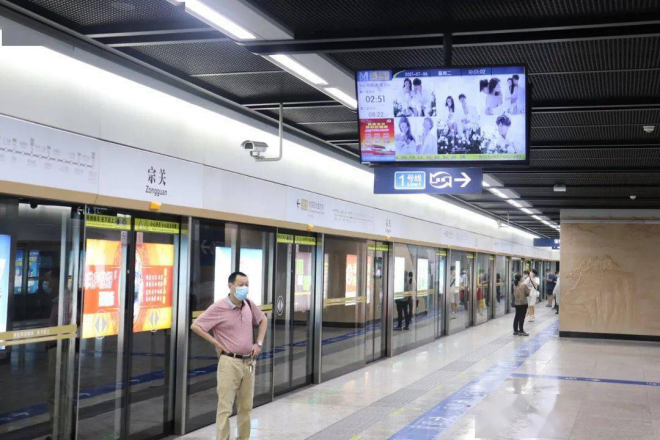
Figure 1: LCD Passenger Information Displays at Metro Station Platform
The global market for transit station display boards was valued at $620.75 million in 2025 and is projected to reach $1,185.90 million by 2033, growing at a compound annual growth rate (CAGR) of 8.43%. The broader passenger information system market, which includes both onboard and station displays, is estimated at $34.12 billion in 2026, with projections indicating it will reach $65.08 billion by 2031 at a CAGR of 13.78%.
China leads the global metro display market with a 22.7% market share, reflecting its unprecedented urban rail expansion. In 2025, China's metro display industry reached 4.86 billion RMB ($670 million), representing 12.3% year-over-year growth. This growth is driven by both new line construction and the renovation of existing lines, with the market expected to reach 5.46 billion RMB in 2026. The Asia-Pacific region as a whole is forecast to grow from $2.8-3.4 billion in 2026 to $5.8-7.2 billion by 2035, maintaining an 8-11% CAGR.
|
Display Technology |
Market Share (2025) |
Primary Applications |
Brightness Range |
|
LCD/TFT-LCD |
28.1-47.2% |
Indoor stations, Onboard PIS, Ticket machines |
700-1,500 nits |
|
Full-color LED |
~45.3% |
Outdoor platforms, Large concourse displays |
5,000-10,000 nits |
|
Monochrome LED |
~15% |
Basic arrival information, Directional signage |
N/A |
|
E-paper |
~3-5% |
Low-power signage, Static maps |
Reflective |
LCD technology particularly dominates indoor metro environments where controlled lighting conditions optimize display performance. LCD offers superior color reproduction and resolution compared to LED alternatives, enabling detailed graphical information display alongside textual passenger communications. For outdoor platform applications, high-brightness LCD variants operating at 5,000-7,000 nits with anti-glare coatings and IP65-rated enclosures provide excellent readability even in direct sunlight.
Station environments represent the largest deployment area for LCD displays in metro systems. These displays serve multiple critical functions throughout the passenger journey:
Ultra-wide stretched bar LCDs, typically in 28-38 inch sizes with aspect ratios of 16:3 or wider, have become increasingly popular for above-door and concourse installations. These displays maximize information display area while minimizing space requirements, showing complete route maps, arrival schedules, and destination information simultaneously.

Figure 2: Ultra-Wide LCD Route Map Display Above Metro Carriage Doors
https://ipc-tech.com/products/pisd-dt485-4k
3.2 Onboard Passenger Information Systems
Inside train carriages, LCD displays have evolved from simple advertising screens to sophisticated information systems that provide passengers with comprehensive journey information. Modern onboard LCD installations typically include:

Figure 3: Onboard Dynamic Route Map LCD in NYC Subway Carriage Showing Real-time Position and Exit Information
https://ipc-tech.com/products/pisd-dt485-4k
The New York City subway system's recent deployment of onboard LCD displays represents a significant modernization milestone. These high-resolution displays present the entire route line, current train position, exit locations, transfer points, and even surface-level street information for upcoming stations, eliminating the need for passengers to wait for scrolling announcements or consult paper maps.
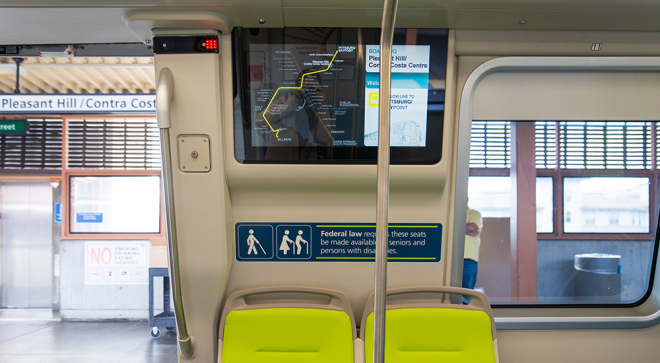
Figure 4: Onboard Passenger Information Screen in Bay Area Rapid Transit (BART) Fleet
https://ipc-tech.com/products/pisd-mt238
Beyond passenger-facing information displays, LCD technology is extensively integrated into Automatic Fare Collection (AFC) gates and ticket vending machines. These smaller displays, typically ranging from 7 to 12.1 inches with 900-1,000 cd/m² brightness, provide users with:
LCD displays deployed in metro environments must meet stringent industry standards to ensure reliable operation under challenging conditions. The European EN 50155 standard, 'Railway Applications - Rolling Stock - Electronic Equipment', serves as the global benchmark for onboard display certification, with equivalent standards including IEC 60571.
|
Standard |
Coverage |
Key Requirements |
|
EN 50155 |
Onboard electronic equipment |
Temperature (-40°C to +70°C), humidity, shock/vibration, EMC, power supply |
|
EN 61373 |
Shock and vibration |
Category 1 shock (50g/11ms), 5G RMS vibration (5-500Hz) |
|
EN 45545 |
Fire safety |
Flame retardant materials, low smoke emission, toxic fume requirements |
|
IP65/IP67 |
Environmental protection |
Dust-tight, water jet protection for outdoor/underground installations |
Railway-grade LCD displays must operate reliably across extreme temperature ranges, typically from -30°C to +60°C for outdoor applications, with specialized thermal management systems to prevent condensation and ensure panel longevity. Vibration resistance is particularly critical for onboard installations, where displays are subjected to constant movement and mechanical stress during train operation.
In 2021, Singapore's Land Transport Authority completed a citywide Passenger Information Display rollout, deploying over 5,000 high-brightness LCD units across buses, MRT stations, and interchanges. Each unit was equipped with GPS tracking, Wi-Fi connectivity, and AI-driven content scheduling that prioritizes emergency alerts, weather warnings, and live arrival updates.
Results within six months:
Tokyo's Metropolitan Transportation Authority deployed 1,200 outdoor high-brightness LCDs across its subway stations, integrating them with crowd flow analytics and predictive arrival algorithms. At Shinjuku Station—the busiest railway station in the world, serving over 3.5 million passengers daily—high-brightness LCDs replaced outdated fluorescent display boards in 2021.
Measured improvements:
Transport for London (TfL) upgraded its Passenger Information System to 7,000-nit outdoor LCD displays across the London Underground network in 2021, addressing longstanding complaints about poor visibility in daylight conditions. The upgrade covered both platform displays and interactive wayfinding kiosks.
Key outcomes:
A major Russian metro system recently completed a comprehensive digital display upgrade in collaboration with display manufacturer Gomany, deploying 300 stretched bar LCD displays and 100 double-sided stretched LCD units across key stations. This project addressed the limitations of traditional single-sided signage by providing 180-degree visibility in corridors, simultaneously serving passengers traveling in both directions.
Implementation highlights:
During a major rail disruption event in Berlin in 2023, Deutsche Bahn's LCD-based passenger information system demonstrated its critical value. Real-time updates pushed via the network of 15-inch and larger outdoor LCD displays provided passengers with alternative route information and delay updates throughout the incident.
Internal audits conducted after the event showed that the real-time LCD information system reduced passenger confusion by over 40% compared to previous similar incidents that relied on static signage and audio announcements alone.
Next-generation LCD display systems are integrating artificial intelligence to deliver predictive, context-aware information. Machine learning algorithms analyze historical ridership patterns, current crowd densities, event schedules, and even weather data to automatically prioritize and personalize displayed content. For example, systems can predict congestion before it occurs and direct passengers to less crowded carriages or alternative routes.
While most current metro LCD displays are one-way information systems, interactive touchscreen displays are increasingly being deployed in station concourses and information kiosks. These allow passengers to:
Metro LCD displays are evolving from standalone information systems to integrated nodes in broader smart city ecosystems. Integration with mobile apps allows passengers to receive personalized alerts on their phones that complement display information, while connectivity with traffic management systems enables coordinated multi-modal transit information across buses, trains, and other transport options.
Modern LCD designs incorporate advanced power management features, including ambient light sensors that automatically adjust brightness based on environmental conditions, reducing power consumption by up to 40% compared to earlier generations. The long operational lifespan of industrial LCD panels (typically 50,000-100,000 hours) also reduces electronic waste compared to shorter-lived display technologies.
LCD displays have become an indispensable component of modern urban metro systems, fundamentally transforming how transit authorities communicate with passengers and how passengers experience urban rail travel. The market data clearly demonstrates continued strong growth, driven by urbanization, new metro construction, and the modernization of existing systems worldwide.
The case studies presented in this article consistently demonstrate measurable improvements across key performance indicators: reduced wait times, improved passenger satisfaction, decreased operational costs, and enhanced emergency communication capabilities. As LCD technology continues to evolve with AI integration, interactive capabilities, and improved energy efficiency, its central role in the future of urban public transit is assured.
For metro operators considering display system upgrades or new line deployments, LCD technology offers the optimal combination of proven reliability, cost-effectiveness, regulatory compliance, and visual performance—particularly when deployed as part of a comprehensive, integrated passenger information strategy.
https://ipc-tech.com/collections/rail-vehicle-products
https://ipc-tech.com/collections/rail-transit-platform-products
[1] Dataintelo. (2026). Global Passenger Information Display System Market Report.
[2] Mordor Intelligence. (2026). Passenger Information Display Market Size & Share Analysis (2026-2031).
[3] MarketsandMarkets. (2023). Smart Transit Signage Market Forecast to 2028.
[4] Future Market Report. (2026). Transit Station Display Boards Market Analysis (2026-2033).
[5] IndexBox. (2026). Asia Transit Station Display Boards Market Analysis and Forecast.
[6] European Committee for Electrotechnical Standardization. (2017). EN 50155:2017 Railway Applications Standard.
[7] Risingstar LCD. (2025). High-Brightness LCD Displays for Passenger Information Systems.
[8] Land Transport Authority Singapore. (2022). Smart PID Deployment Evaluation Report.
[9] Japan Railway Group. (2022). Shinjuku Station Digital Display Upgrade Post-Implementation Review.
[10] Transport for London. (2022). Underground PIS Upgrade Performance Summary.
[11] Deutsche Bahn. (2023). Berlin Rail Disruption Response Internal Audit.
[12] China Metro Display Industry Report. (2026). Market Dynamics and Industry Outlook Analysis.


