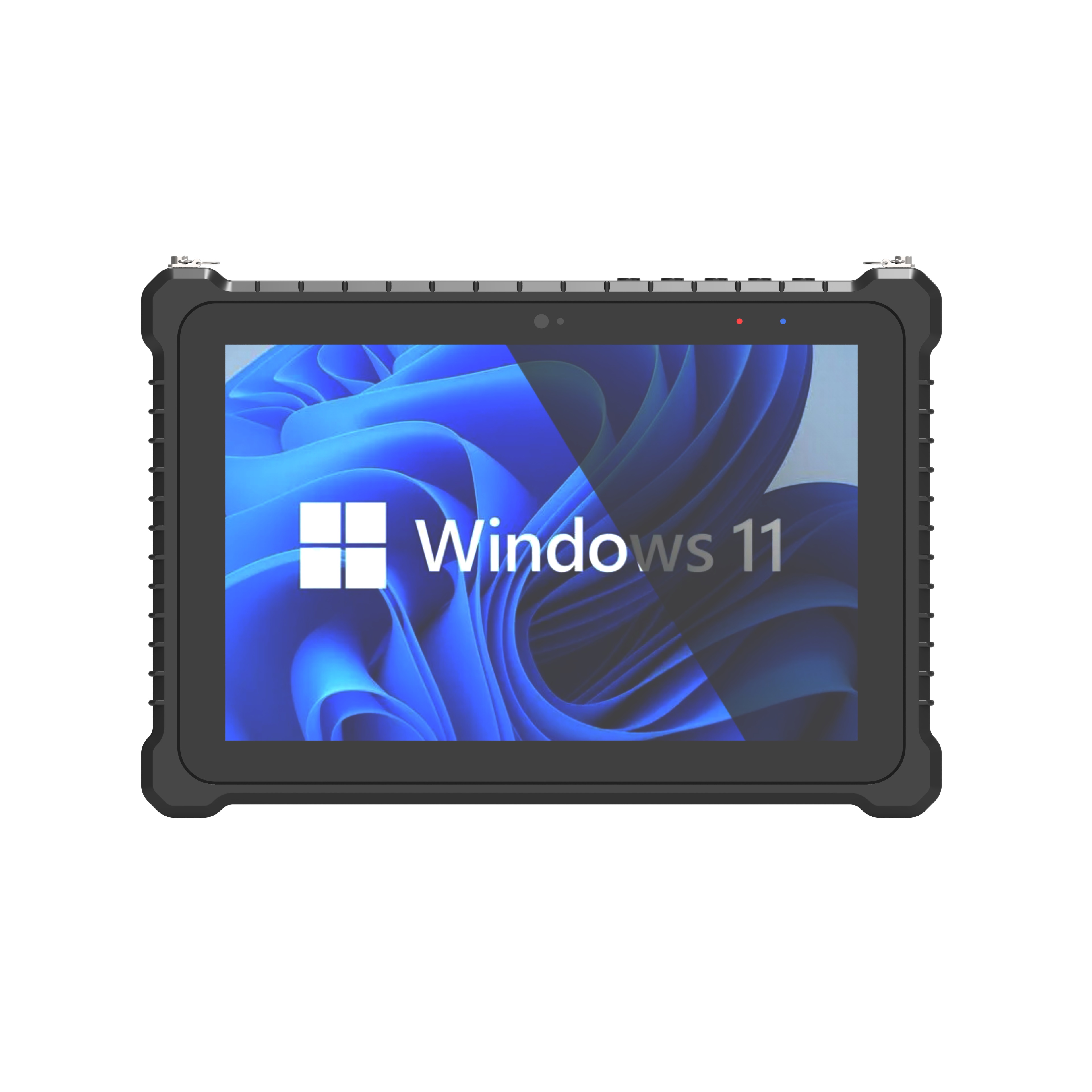
Introduction: Front-panel IP65 seals the operator-facing side of a flush-mounted display, while dust and water reach the rear shell, connectors, and cabinet heat space by a separate path.
On a datasheet, the string "IP65" looks like it applies to the whole box, and that is exactly where confusion starts. Maintenance technicians usually meet the rating after the fact: a screen is already bolted into a cabinet door, a washdown shift is starting, and someone asks whether the face can be rinsed. The answer begins with where the seal sits. On an industrial touch display such as the TPM-L9215, the figure belongs to the front panel, the surface an operator touches and a spray nozzle points at. Following dust and water from the bezel inward, and then out to the rear shell, makes the edge of that rating easy to picture and easy to explain to whoever asked.
Two digits, two different jobs. The first digit, 6, describes a dust-tight enclosure: dust does not get inside. The second digit, 5, describes protection against water projected as a jet, enough for a directed spray at the face rather than a unit dropped in a tank. Read as a pair, IP65 says the sealed surface handles both a dusty shift and a wet clean-down without letting material through. What matters more on a maintenance walk-through is the word in front of IP65: front panel. The rating describes one boundary of the product, the face that meets the operator and the cabinet cutout. On a flush-mounted display, that boundary is a closed loop running around the bezel and pressed against the door skin. Everything inside the loop is protected. Everything outside it, including the rear of the chassis, sits on the other side of the line. That line is set at installation. A 21.5-inch unit with an 18 mm body and a 511 mm × 308 mm cutout depends on even clamping pressure around the whole frame, because a gasket seals only where the bezel and the door skin genuinely meet. The practical meaning of front-panel IP65 is therefore quite concrete: the face is protected once the cutout is correct, the gasket is continuous, and the frame is pulled down evenly.
Dust and water rarely arrive at the same angle, and they meet the enclosure in different places. A shift on the floor shows this clearly: a fine layer of powder settles on the cover glass, a wet cloth passes over the bezel seam, and later someone opens the cabinet door and finds moisture near the connectors. Three separate events, three separate locations, even though the single word "IP65" sounds like it covers all of them. Keeping the two paths apart is what makes the rating useful rather than misleading.
Dust lands on the cover glass first, then creeps toward the seam where the bezel meets the cabinet door. The gasket behind that seam is the only thing standing between the outside world and the electronics. It works by being compressed, which makes the seal a mechanical condition rather than a permanent property: a corner pinched harder than its neighbours can let a gap open at the opposite edge. Water behaves the same way and moves faster, running down the face and pooling at the lowest point of the seam. When the bezel sits flat and the fixings are even, the contact path stays closed and the front-panel IP65 boundary holds around the entire loop.
Behind the cabinet door the picture inverts. The rear of the unit carries video inputs, a touch USB port, a DC 12V power inlet, and the OSD buttons used to adjust brightness and contrast, all mounted in or through the rear shell. Cable openings, connector bodies, chassis seams, and any ventilation or heat-relief structures around the housing sit outside the front loop. Water that runs along a cable, mist that drifts behind the door, or condensation forming in the cabinet space reaches those areas directly. On the TPM-L9215 the rear housing is SGCC galvanized steel with grounding isolation, which serves structure and shielding; the front seal stops at the bezel.
A whole-unit IP65 claim describes an enclosure that is closed on every side, and it takes considerably more design work than sealing a face. Cable entries have to pass through glands rated to the same level. Connector panels need covers or sealed shells. Heat has to leave without leaving a hole, which generally means filtered vents or a sealed conduction path instead of open slots. Every screw boss, seam, and service panel becomes part of the test boundary. A display built for flush cabinet mounting follows a different architecture, so its specification sheet states the rating for the front panel and leaves the cabinet to handle everything behind it. This is also where compliance markings get mixed up with protection ratings. CE marking on electrical equipment is a European market conformity declaration covering directives that include electromagnetic compatibility, and FCC Class B sets emission limits for digital devices used in residential and light-industrial settings. Both belong to electromagnetic compliance; ingress protection is a separate subject with its own test conditions. A unit can carry CE and FCC Class B while its dust and water rating stays limited to the front panel, because the two statements answer different questions about different surfaces. Most industrial display manufacturers list the figure as front-panel IP65 for exactly that reason. For maintenance work, the useful habit is to keep three areas separate in your head: the front face under its IP65 boundary, the rear connector and cable area, and the cabinet space where heat builds up. Dust or water marks found in the second or third area tell you something about cabinet sealing, cable routing, or airflow rather than about the front-panel seal. Reading the rating as a map of where protection stops is far more practical than reading it as a promise about the whole box.
Front-panel IP65 becomes easy to use once you picture the loop it draws around the bezel and the gasket contact path that closes it. Inside the loop, the face resists dust and a directed water jet; outside it, rear connectors, cable openings, and the heat space in the cabinet follow their own rules. That distinction matters most on the shop floor, where a technician decides whether a rinse, a wipe, or a leak investigation is safe. Anyone confirming how a specific 21.5-inch industrial touch display handles this can review the mounting cutout and front-panel sealing facts listed for the TPM-L9215.
A: It means the face of the unit, including the cover glass, the bezel, and the seam where the frame meets the cabinet cutout, is dust-tight and resists a directed water jet. The protection applies while the display sits in a correctly sized cutout with the gasket evenly compressed. On the TPM-L9215 the front panel carries the IP65 figure, while the rear shell, connectors, and OSD keys sit behind that boundary.
A: A whole-unit rating covers every face of the enclosure and calls for sealed cable glands, covered connectors, and a heat path that lets air out without letting dust or water in. A front-panel rating covers one face only. Both are valid statements about different physical boundaries. A display designed to flush-mount in a cabinet door protects the operator-facing surface, the part that gets sprayed or wiped, and relies on the cabinet to shield the rear.
A: Rear video inputs such as VGA, HDMI, and DP, the USB touch port, the DC 12V inlet, the rear OSD buttons, cable entries, chassis seams, and any ventilation or heat-related openings all sit outside the front seal. Water that follows a cable or condenses inside the cabinet reaches these areas directly. Dust or moisture found there points to cabinet sealing, cable routing, or airflow, and is worth tracking separately from the front face.
CE marking - Internal Market, Industry, Entrepreneurship and SMEs
NIST SP 800-82 Rev. 2: Guide to Industrial Control Systems (ICS) Security